
Our Myopia Treatment Options
Take control of your vision with early myopia treatment

Atropine Eye Drops
Low-dose atropine eye drops are commonly used to slow the progression of myopia in children, especially when myopia begins at a young age and is expected to worsen over time.
These eye drops contain a very small concentration of atropine, typically 0.01%, which has been shown to effectively slow the rate at which myopia increases. Studies and clinical use have demonstrated that this low-dose treatment can reduce myopia progression by around 50–60% in many children.
Unlike older higher-dose atropine treatments, the 0.01% formulation produces minimal side effects and has a reduced rebound effect when treatment ceases. Low-dose atropine causes very little pupil dilation and generally has almost no impact on near vision, allowing children to continue reading and studying comfortably.

Visual Aids
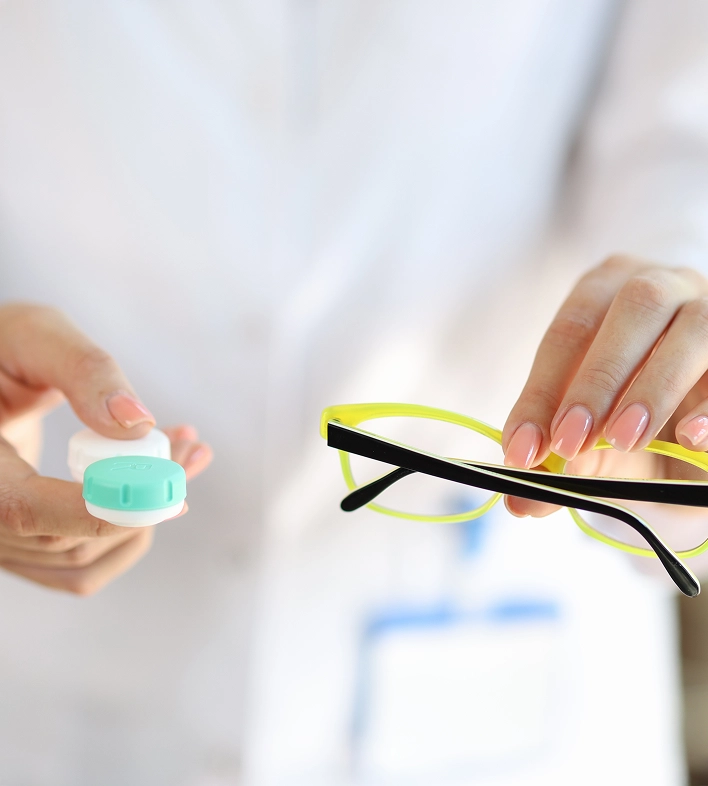
For most people, the most familiar and accessible way to manage myopia is through glasses or contact lenses.
Standard prescription glasses correct near-sightedness by helping light focus properly on the retina. This provides clear vision and reduces eye strain during daily activities such as reading, studying or using digital devices. Contact lenses offer similar benefits, with certain designs also supporting myopia control while providing clear, convenient vision for active lifestyles.
Visual aids such as specialised spectacles and contact lenses can do more than simply correct blurry vision. These types of lenses aim to slow the progression of myopia, particularly in children whose eyes are still growing.
Traditional glasses correct near-sightedness by helping light focus clearly on the retina, while also preventing eye strain that worsens myopia. However, these myopia-control spectacle/contact lenses change how light is focused across the retina. These light changes affect the signals in the eye that cause the lens to grow longer, creating a treatment zone and reducing the progression of myopia over time.
Laser Eye Surgery
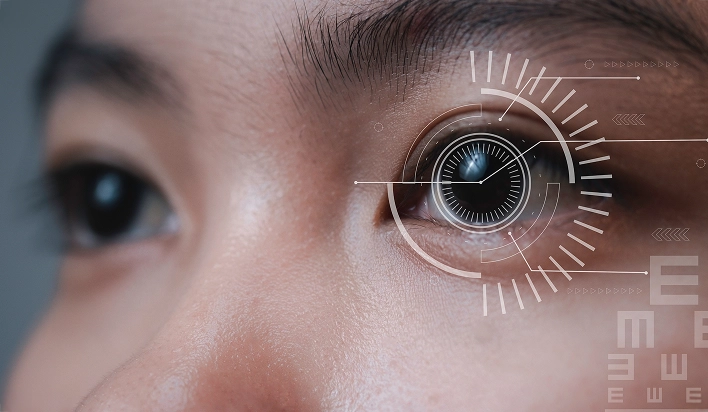
Laser-assisted in situ keratomileusis, commonly known as LASIK, is a surgical procedure that reshapes the cornea to improve how light enters the eye. This can significantly reduce or eliminate the need for glasses or contact lenses.
LASIK is typically suitable for adults with myopia, as the condition of their eye is more likely to have stabilised. A detailed eye assessment is required to determine whether the procedure is appropriate, as factors such as corneal thickness, overall eye health and prescription stability must be evaluated.
Can Myopia Be Prevented or Slowed Down?
While myopia cannot be reversed once the eye has lengthened, its progression can often be slowed with early intervention and proper eye care. Managing myopia typically requires a comprehensive approach that combines medical treatment, visual correction and healthy lifestyle habits.
For children, treatments such as low-dose atropine eye drops and specialised myopia-control lenses may help regulate how the eye grows and reduce the rate at which short-sightedness worsens. Regular eye examinations are also important so that any changes in vision or eye length can be detected early and treatment can be adjusted accordingly.
As each person’s eyes develop differently, the most effective way to slow myopia progression is through a structured myopia management plan guided by an eye specialist.
Creating Myopia Management Plansfor Children and Adults
Our clinic is equipped with modern diagnostic technology to accurately detect and monitor myopia progression in both children and adults. Through detailed eye assessments, we evaluate factors such as eye growth, prescription changes and overall eye health to better understand each patient’s condition.
Based on these findings, our doctor can recommend a personalised myopia management plan for you, that aims to slow the progression of myopia and reduce the long-term risks associated with it.
If you or your child are experiencing worsening short-sightedness, contact us for a myopia assessment today.
About Myopia Treatment
Myopia cannot be permanently cured because it is caused by a structural change in the eye, specifically when the eyeball grows longer than normal. This makes it important to begin treatment early and slow progression while the effects are still mild.
Myopia management is usually most effective when started early, as soon as vision changes are noticed. Early intervention may help reduce the rate of progression and lower the risk of developing high myopia later in life.
Standard glasses and contact lenses are only meant to correct blurry vision. In order to control myopia, your child may need specialised myopia-control lenses that refocus light in the eye.
Increased outdoor time has been associated with a lower risk of developing myopia in children. Natural light exposure and looking at distant objects may help regulate eye growth. While outdoor activity alone may not stop progression once myopia has started, it remains an important lifestyle measure alongside clinical treatment and regular monitoring.
Our Singapore Eye Specialist

Dr Leo Seo Wei
Senior Consultant Ophthalmologist
MBBS (Singapore), MRCSEd (Ophth), MMed (Ophth), FRCSEd (Ophth), FAMS (Ophth)
Dr Leo Seo Wei is a Senior Consultant Ophthalmologist in Singapore with over 20 years of experience in myopia treatment. Her career spans extensive practice and specialised training in Singapore and the United States, where she received numerous awards for her work in the field of ophthalmology.
Dr Leo is a paediatric eye specialist who is well-versed in treating myopia and other eye conditions in children. She values the unique balance that ophthalmology offers, combining both medical management and surgical care to support patients at every stage of life. From newborns and pre-verbal children facing visual development conditions such as crossed eyes and lazy eye, to children experiencing rapid myopia progression, she is dedicated to preserving and strengthening sight early on.
Dr Leo has been invited to teach, speak and conduct live surgical demonstrations at international conferences and masterclasses across Asia-Pacific, Europe and the USA. She has also published numerous peer-reviewed articles, reflecting her commitment to advancing ophthalmic care and sharing knowledge worldwide.


#10-04 Mount Elizabeth Medical Centre,
3 Mount Elizabeth,
Singapore 228510
Tel : +65 6737 8366
Email : info@drleoeyespecialist.com
Emergency hotline: +65 9668 2229
Follow us on: