

Understanding Myopia
Learn how myopia affects vision, and why it should not be ignored

Did you knowThat the majority of Singaporeans are affected by myopia?
Our country has one of the highest myopia prevalence rates in the world, making it a significant public health concern.
of children already have myopia by the time they are 7 years old
of children are affected by myopia by the end of Primary 6 (12 years old)
of young adults end up with myopia by adulthood
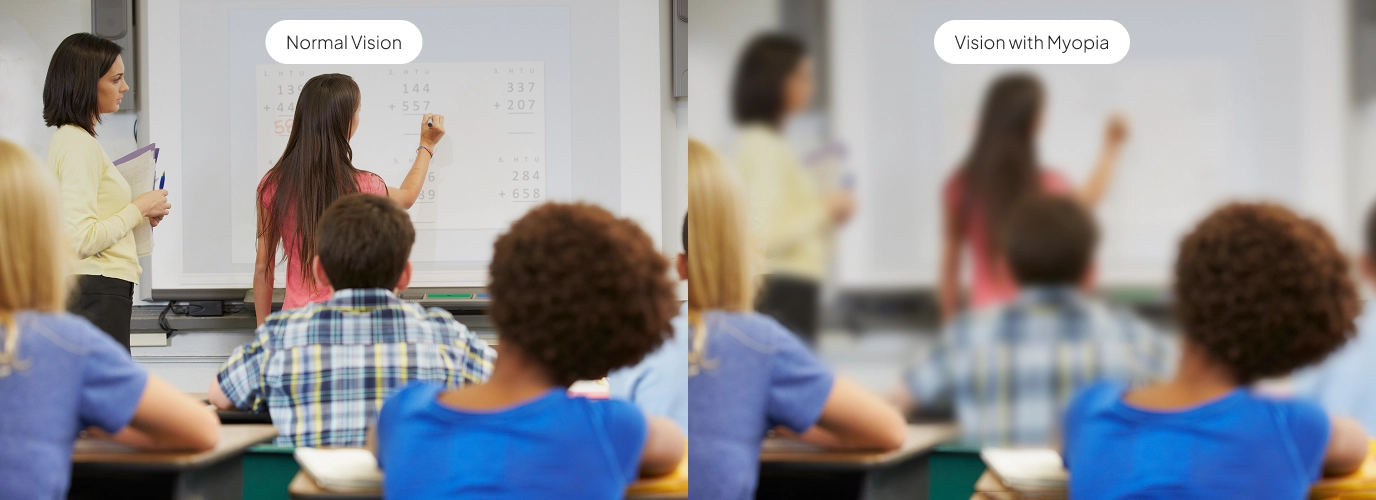
This is why early detection and timely myopia control are so important. By introducing appropriate treatment strategies where applicable, it is possible to reduce progression and better protect lifelong vision for you and your children.
What Is Myopia?
Myopia, commonly known as short-sightedness, is a vision condition where distant objects appear blurry while nearby objects remain clear. It occurs when the eyeball grows too long or when the cornea is too curved, causing light entering the eye to focus in front of the retina instead of directly on it.
Myopia often develops during childhood and the early school years, and it may worsen as the eyes continue to grow. Children with myopia may experience symptoms such as squinting, difficulty seeing the whiteboard in class, holding books or screens very close, or frequent headaches.
Early detection and management are important to help slow its progression and reduce the risk of developing high myopia, which may increase the likelihood of eye complications later in life.
Common Myopia Signs and Symptoms

 Blurred vision when looking at distant objects such as whiteboards, road signs or television screens
- Frequent headaches caused by eye strain
- Tired or strained eyes, especially after prolonged visual tasks
- Difficulty seeing clearly while driving, particularly at night
- Needing to squint in order to see more clearly
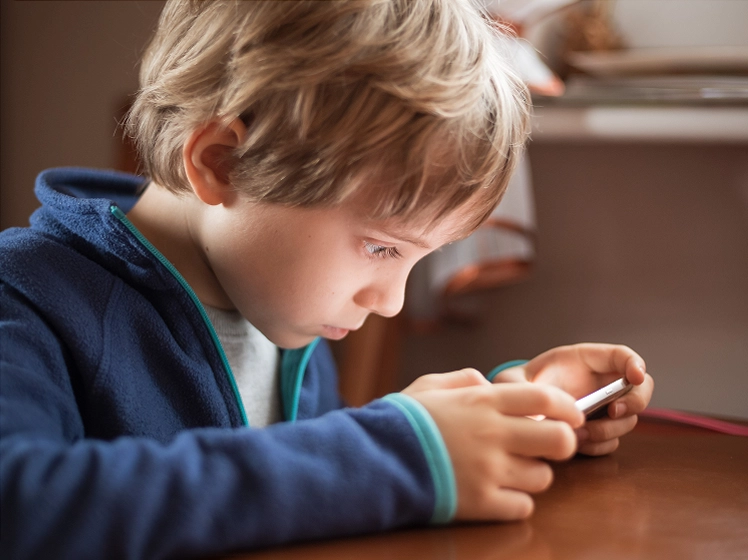
- Sitting very close to televisions, tablets or computer screens
- Holding books, phones or tablets very close to the face while reading
- Frequently rubbing the eyes
- Blinking excessively or squinting during visual tasks
If you are experiencing these symptoms or notice your child exhibiting this behaviour, it may be wise to consult an eye specialist and receive a diagnosis.
Diagnosing Myopia
When you visit a specialist for a diagnosis, they are able to carry out a series of eye exams to assess how clear your vision is. There are also evaluation methods that help determine the structure of your eye, assisting your doctor in visualising how myopia is progressing over time.
Visual Acuity Test
You will be asked to read letters off a chart to determine how clearly you see distant objects.
Refraction Test
Your doctor measures how light focuses in the eye to determine whether myopia is present.
Axial length Test
Your doctor examines the length of the eye using specialised imaging devices, to track eye growth and assess the risk of myopia.
For children, early diagnosis is particularly important as treatment may help slow the rate at which myopia worsens.
Why Early Myopia Control Matters
When myopia develops at a young age, it tends to progress more quickly, increasing the likelihood of a child developing high myopia later in life.
High myopia is associated with a greater risk of serious eye conditions in adulthood, including:
- Retinal detachment
- Glaucoma
- Myopic macular degeneration
For this reason, early myopia control strategies such as low-dose atropine eye drops, lifestyle changes and regular monitoring are often recommended to help slow the progression of myopia and reduce the likelihood of developing high myopia.
About Myopia
Myopia develops when the eyeball grows too long from front to back, causing light to focus in front of the retina instead of directly on it. This causes near-sightedness. Both genetic and environmental factors play a role. Children with myopic parents are at higher risk, and prolonged close-up activity such as reading or screen use, combined with limited outdoor time, may contribute to its development and progression.
Myopia commonly begins during early school years, typically between the ages of 6–12, when children start spending more time reading, writing and using digital devices. Once myopia develops, it may continue progressing as the eye grows during childhood and teenage years. Early detection through regular eye examinations allows doctors to begin myopia control treatments sooner and help slow its progression.
Children should generally have their eyes examined at least once a year, especially if they already wear glasses or have risk factors for myopia. More frequent reviews may be recommended if myopia is progressing quickly or if treatment such as low-dose atropine is being used, so that eye growth and prescription changes can be monitored closely.
Increased outdoor time has been associated with a lower risk of developing myopia in children. Natural light exposure and looking at distant objects may help regulate eye growth. While outdoor activity alone may not stop progression once myopia has started, it remains an important lifestyle measure alongside clinical treatment and regular monitoring.
Our Singapore Eye Specialist

Dr Leo Seo Wei
Senior Consultant Ophthalmologist
MBBS (Singapore), MRCSEd (Ophth), MMed (Ophth), FRCSEd (Ophth), FAMS (Ophth)
Dr Leo Seo Wei is a Senior Consultant Ophthalmologist in Singapore with over 20 years of experience in myopia treatment. Her career spans extensive practice and specialised training in Singapore and the United States, where she received numerous awards for her work in the field of ophthalmology.
Dr Leo is a paediatric eye specialist who is well-versed in treating myopia and other eye conditions in children. She values the unique balance that ophthalmology offers, combining both medical management and surgical care to support patients at every stage of life. From newborns and pre-verbal children facing visual development conditions such as crossed eyes and lazy eye, to children experiencing rapid myopia progression, she is dedicated to preserving and strengthening sight early on.
Dr Leo has been invited to teach, speak and conduct live surgical demonstrations at international conferences and masterclasses across Asia-Pacific, Europe and the USA. She has also published numerous peer-reviewed articles, reflecting her commitment to advancing ophthalmic care and sharing knowledge worldwide.


#10-04 Mount Elizabeth Medical Centre,
3 Mount Elizabeth,
Singapore 228510
Tel : +65 6737 8366
Email : info@drleoeyespecialist.com
Emergency hotline: +65 9668 2229
Follow us on: